Hair Transplant Recovery Cost and Aftercare Guide
5 min read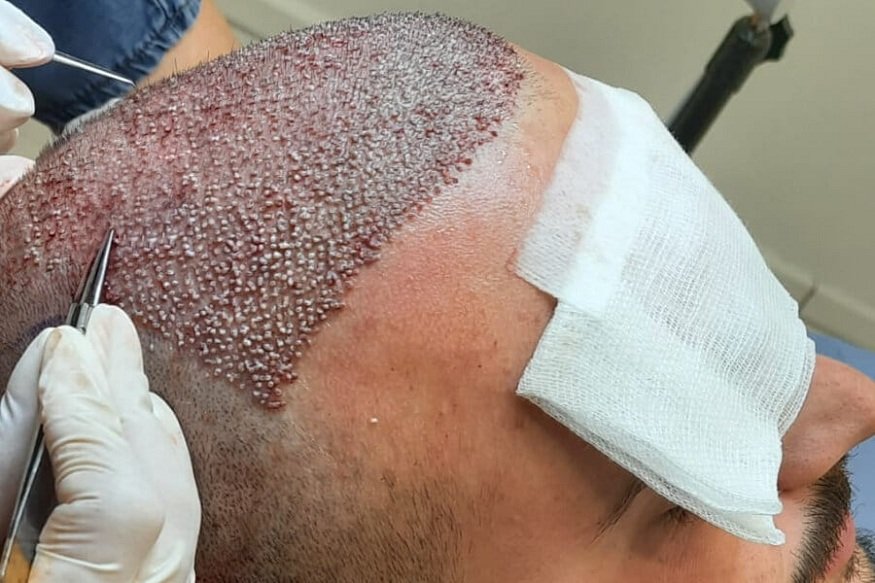
Hair fall can not only make your appearance look unattractive but will also have a negative impact on your confidence. Although hair fall is a normal phenomenon, continuous hair loss, bald patches, and receding hairlines require permanent hair restoration solutions. Hair transplant is one of the most popular procedures that helps restore your hair in places of hair fall by using modern techniques.
Should you be thinking of having hair transplant surgery, it is crucial to get familiar with the hair transplant procedure, duration of recovery, results of the treatment, hair transplant cost, and hair transplant aftercare.
What Is a Hair Transplant?
A hair transplant procedure refers to the process of harvesting hair follicles from healthy parts of the scalp, such as the side or rear regions, and transferring them to parts of the head that have balding or hair loss issues. Since the hair being transplanted originates from the individual’s scalp, there is no danger of rejection since the hair belongs to the patient.
Some cases that may warrant this procedure include men or women who have pattern hair loss, receding hairline, balding crown, or certain cases of permanent hair loss.
Knowledge about the Hair Transplant Procedure
Hair transplant surgery typically involves the initial consultation. The surgeon will examine the scalp, determine the pattern of hair loss, examine the donor site, and discuss the ideal hairline. Additional tests like blood testing and others may be prescribed at the consultation stage.
Read More: Hair transplant: all you need to know about this procedure and the risks
The two major techniques are known as Follicular Unit Extraction, or FUE, and Follicular Unit Transplantation, or FUT.
With the FUE technique, individual hair follicles are extracted and transplanted to the areas where the hair thins or is absent. Usually, there are tiny marks left from the procedure that become less visible during the healing process.
With the FUT technique, a strip of skin from the donor area with hair follicles is taken and divided into grafts, which are then transplanted to the recipient area. The selection of the method will depend on the type of hair loss, the quality of donor hair, the number of grafts needed, etc.
The surgery usually takes place under local anaesthesia. According to the number of grafts, it may take several hours and in some cases even involve more than one surgery.
What Will Be the Results after Hair Transplantation?
Swelling, redness, tenderness, and even the formation of little scabs can occur after the surgery around the treated regions. These symptoms can be only temporary. You should be advised by your doctor about scalp washing, positions during sleep, medications, and what you should refrain from doing.
Scratching and rubbing the region where the transplant was done is also something you shouldn’t do. Your follicles require time to heal.
In the first weeks after the surgery, you can experience hair loss. This phenomenon is often referred to as shock hair loss. It doesn’t always mean that the transplant failed. Healthy follicles can be underneath the skin, and new hair growth can start later on.
Hair Transplantation Recovery Timeline
The recovery period will vary from one individual to another, but most individuals will be able to engage in light activities in a matter of days.
In the first week, there could be some redness and crusting of the scalp area. This gets better with proper care. People are generally advised to stay away from strenuous exercises and activities that could result in excessive perspiration until the doctor permits them.
Transplanted hairs will shed during the following weeks. Hair transplantation takes time for any results to be seen. Patients should start seeing changes after several months, although full results could take about 9-12 months. It is essential to follow the instructions of the surgeon during the whole recovery period.
Cost of Hair Transplantation
There could be great variations in the cost of a hair transplant among various individuals. There is no fixed rate since the overall cost depends on how many grafts an individual will need, the technique that will be used, the clinic, the experience of the doctor, and the extent of hair loss.
Individuals who have less hair loss may require fewer grafts than those who have more hair loss. This can affect the overall cost.
In comparison of various clinics, it would be advisable for an individual to look at the quality of the services offered in addition to the cost.
Hair PRP Treatment
Hair PRP treatment is a nonsurgical procedure using PRP obtained from the patient’s blood. Blood is drawn, and PRP is concentrated. Then, the concentrated PRP is injected into specific areas of the scalp.
PRP treatment may be suggested as a therapy for certain kinds of hair thinning and may even be applied in combination with hair transplantation. However, one should keep in mind that hair PRP treatment is a different treatment method than hair transplantation. In PRP therapy for hair, hair follicles are not transferred; only the scalp and hair follicles receive treatment. Whether PRP treatment suits a patient or not depends on the patient’s reason for hair loss.
Aftercare in Hair Transplant
It is crucial for protecting the grafted follicles. The patient must adhere to the recommendations of the doctor on washing his scalp and medications to take. It is advised not to touch, scratch, or pull off scabs from the graft site.
Read More: Hair Fall Control Routine: Choosing the Right Shampoo and Conditioner
One should limit himself from sun exposure at the early stage of the treatment and engage in physical exercise after medical clearance. If instructed by the physician, one must not smoke since this habit could hinder the healing process.
Follow-up visits to the doctor will enable him to check on your recovery and growth of hair. In case you experience any abnormal pain, heavy bleeding, swelling, the presence of pus, and others, seek medical attention immediately.
Final Thoughts:
Hair transplant offers a long-lasting solution for certain people who have permanent hair loss issues, but it requires thorough planning, good donor hair follicles, correct surgical procedures, and proper aftercare. Knowledge about hair transplant procedure, hair transplant recovery time, hair transplant costs, PRP therapy for hair, and other treatments can assist you in making a better decision.
CTA:
In case you want to do a hair transplant in Hyderabad, you must find a specialist at Akruti Plastic and Cosmetic Surgery Centre who will provide you with the right advice. The appropriate treatment needs to be chosen based on your hair loss problem and expectations rather than price only.