
Clinical Thresholds in Pupillometry: When Should You Be Concerned?
4 min read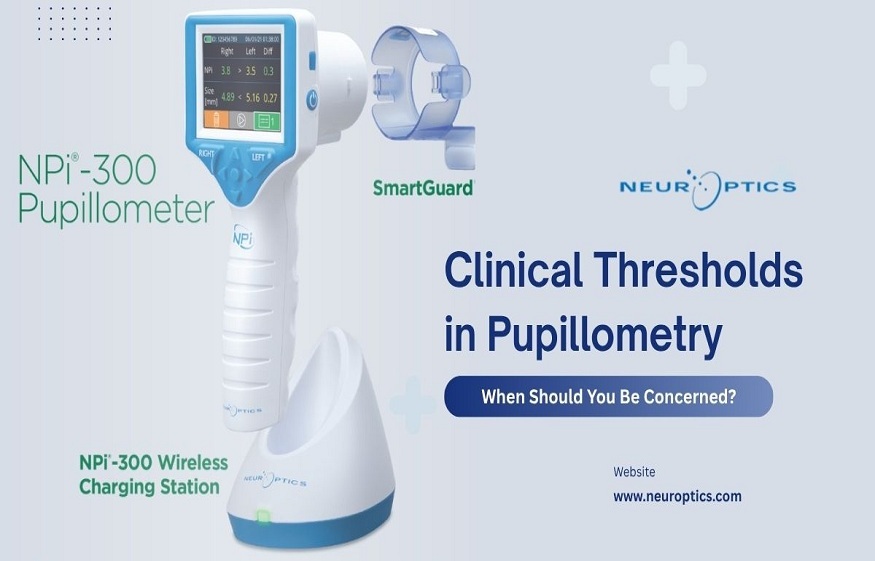
Pupil checks are routine in neurological care, but interpreting them isn’t always straightforward. Clinicians often measure pupil size as part of a regular assessment, especially when there is concern about neurological change.
On the surface, it looks simple. You observe the pupil, check how it reacts, and note the findings. But deciding when something is actually concerning is less clear.
This is where pupillary size measurement becomes more useful. When observations are repeated and recorded properly, small differences can start to stand out.
Looking Beyond a Single Measurement
A single attempt to measure pupil size usually serves as a reference point. On its own, it rarely provides enough information.
What matters more is how that measurement compares with earlier readings. Changes may not be obvious in one check, but they can become clearer over time.
Read More: WHAT MAKES SMALLER CIGARETTE BRANDS DESIRABLE THAN THE BIG NAMES?
This is where pupillary size measurement starts to add value. It gives something that can be tracked and compared.
Understanding Percent Change in Pupil Size
One of the more useful ways to look at pupil response is through percent change in pupil size. This reflects how much the pupil constricts relative to its starting size.
In a visual exam, this is often estimated. With neurological tools, it can be measured more consistently.
A smaller percent change in pupil size may suggest a weaker response, but it is not interpreted on its own. It needs to be considered along with other findings from the neuro exam.
Where Clinical Concern Comes In
The idea of a “threshold” can be misleading. There isn’t always a clear point where a value becomes abnormal.
Instead, clinicians look for patterns. If repeated checks start to look different from earlier ones, that tends to draw more attention than a single unusual reading.
With pupillary size measurement, what matters is whether the change shows up again. If it does, it’s more likely to be taken seriously.
At the same time, readings are not taken at face value. The way the measurement is done can still affect what’s seen.
Role of Neurological Tools
To reduce variation, many settings now use Pupillometry for pupillary size measurement. These tools provide numerical values instead of relying only on observation.
That makes repeat checks easier to compare, especially when looking back at earlier readings.
It also helps when different clinicians are involved. Instead of relying on written descriptions, they can look at recorded values and understand what changed.
NPi as a Supporting Measure
Many neurological tools also provide an NPi, which combines different aspects of the pupil response into a single value.
During the neuro exam, the NPi is often used as a quick reference. It gives a general sense of how the pupil is responding.
At the same time, it does not replace individual measurements. The NPi still comes from how clinicians measure pupil size and interpret the response.
Because of this, it makes more sense when used along with pupillary size measurement rather than on its own.
Why Trends Matter More Than Cutoffs
It can be tempting to look for exact thresholds, but in practice, patterns over time tend to matter more.
If repeated checks begin to show a steady change, that’s usually more useful than focusing on a single number.
The same goes for percent change in pupil size. One reading might not stand out, but a few similar readings can start to point in a direction.
Looking at values together makes it easier to understand what might be changing.
Keeping Everything in Context
Even with more structured measurement, pupil findings are only one part of the assessment.
Clinicians combine what they see during pupillary size measurement with the rest of the neuro exam and other observations.
A change in percent change in pupil size may lead to closer evaluation, but it does not explain the cause on its own.
Read More: Making sure home medical equipment is safe and comfortable
Visual checks and neurological tools both play a role. What matters more is how consistently they are used and how the findings are read.
Final Thoughts
Pupillometry gives a more structured way to measure pupil size, but it doesn’t give fixed answers.
With repeated pupillary size measurement, small shifts can become easier to notice, especially when earlier readings are available.
Looking at percent change in pupil size and NPi together can help build a clearer picture, but they still need to be read along with the neuro exam.